
Know Your Keloid · July 21, 2026 · 7 min · By Lucian Okoye
Can a tattoo cause a keloid? Risk, warning signs, and what to do
A tattoo is thousands of tiny wounds in a row. In keloid-prone skin any of them can overheal, so here is the real risk and how to lower it.
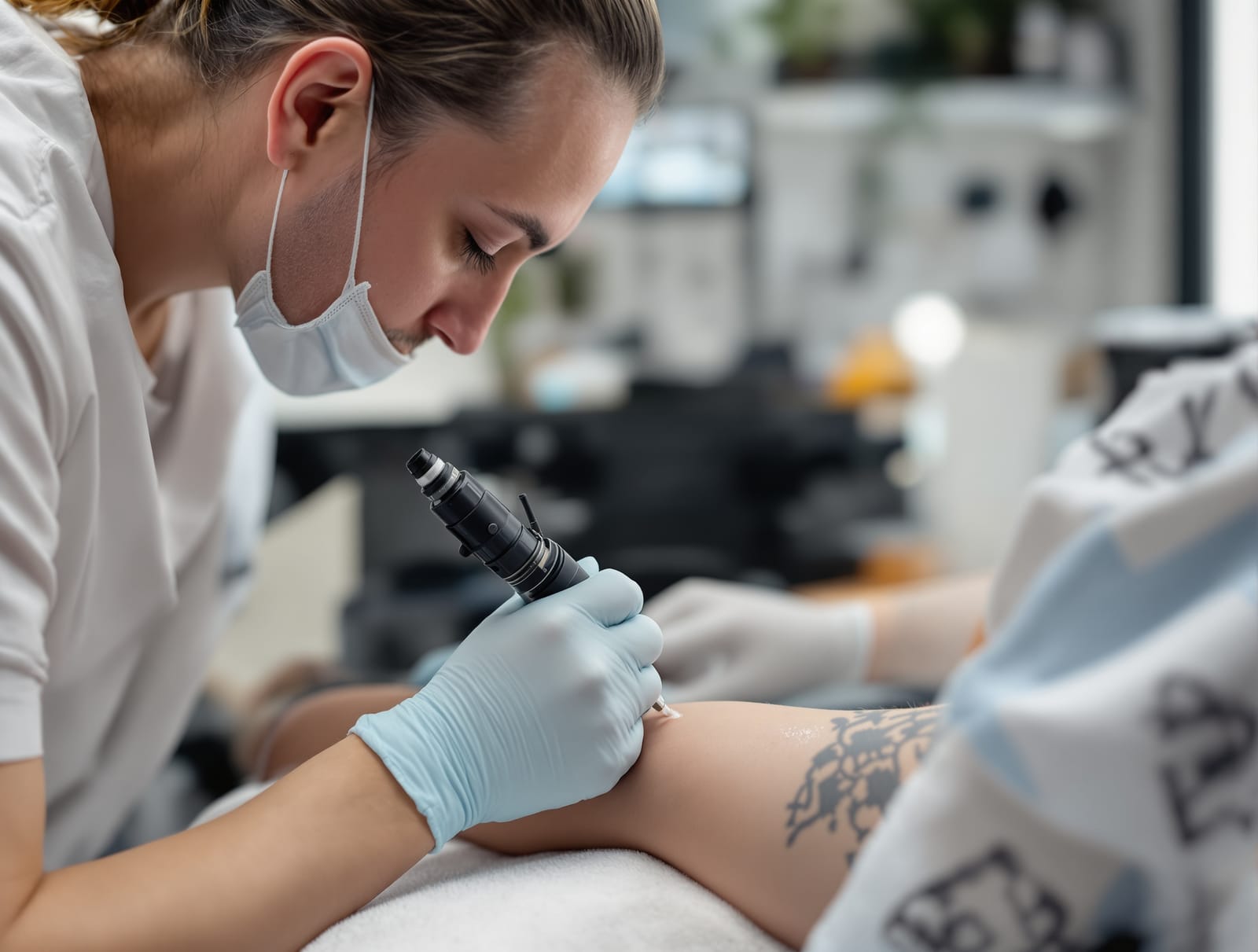
Yes, a tattoo can cause a keloid, but only in skin that is already inclined to overheal. A tattoo machine drives needles into the dermis thousands of times a minute, so a tattoo is not a drawing on the skin, it is a dense field of controlled puncture wounds. Most people heal those wounds flat and never think about scarring again. In someone who is keloid-prone, any of those punctures can trigger the runaway collagen response that builds a keloid, and it can happen months after the tattoo looked completely healed.
Why ink is not the problem, the wound is. A keloid does not care what pigment sits in the skin. It forms because the healing process fails to switch off, and fibroblasts keep laying down collagen after the wound has closed, producing a raised scar that spreads past the original injury. The American Academy of Dermatology describes keloids exactly that way, as scars that grow larger than the wound that caused them (AAD, keloids overview). That means the tattoo's risk comes from trauma, not from the ink, which is why heavy shading, repeated passes over the same area, coverups of old work, and laser tattoo removal all carry more keloid risk than a light single-pass linework piece.
Who actually needs to worry. The risk is not evenly spread. Take it seriously if you have ever had a keloid anywhere, if a parent or sibling has one, if you have a deeper skin tone, or if you are between roughly 10 and 30, the years when keloids form most readily. Mayo Clinic lists keloid formation among the recognized complications of tattooing, alongside infection and allergic reaction, and notes that people who scar this way are the ones most likely to run into it (Mayo Clinic, tattoos: understand risks and precautions). Placement matters just as much as biology. The central chest, the sternum, the shoulders, the upper back, and the jawline are the high-tension zones where keloids cluster, and a large piece across any of them is a bigger gamble than the same design on a forearm or calf. If keloids run in your family, the background on inherited risk in why keloids are more common in skin of color is worth reading before you book.
Is that raised line a keloid, or normal healing? Fresh tattoos are supposed to be swollen. For the first week or two the lines can sit slightly proud of the skin, feel warm, and itch as scabs form and flake, and that is ordinary. Two other things also raise a tattoo without being a keloid. Some inks, classically red and certain pigments used in colored work, provoke a delayed allergic reaction that makes only those colors raised, bumpy, and itchy while the rest of the tattoo stays flat. And a hypertrophic scar can follow a heavily worked line, staying firm and raised but confined to exactly where the needle went. The boundary test is the one that settles it: a hypertrophic scar respects the outline of the injury and usually softens over a year or two, while a keloid pushes outward onto skin that was never tattooed. That distinction, and why it changes the plan, is covered in keloid or hypertrophic scar. A raised area that keeps enlarging months after the tattoo healed, spreads beyond the design, and feels firm and rubbery is behaving like a keloid.
How to lower the risk before you book. If you are keloid-prone and still want ink, stack the odds. Test first with something small and simple on a low-tension, low-visibility area such as the outer forearm or lower leg, then wait six to twelve months to confirm it healed flat before committing to anything larger. Avoid the high-risk zones entirely, and favor simpler linework over dense blackwork, aggressive shading, and repeat sessions over the same skin. Tell the artist about your keloid history so they can work with a lighter hand and stop if the skin is reacting badly, and choose a licensed studio with proper sterile technique, since infection and prolonged inflammation both make abnormal scarring more likely. If your history is strong, a short dermatology consult before the appointment costs very little compared with treating a chest keloid later, which is the whole argument of how to prevent keloids after surgery, piercings, and tattoos.
Aftercare that protects the scar, not just the art. Follow your artist's healing instructions to the letter for the first few weeks: keep the tattoo clean, keep it lightly moisturized rather than dry and cracking, and never pick or scratch the scabs, because every reopened spot is a new wound. Once the skin has fully closed, usually around two to four weeks, silicone gel is the one over-the-counter measure with real preventive evidence and can be worn daily over a healed tattoo. Keep the area out of direct sun while it settles, and skip the gym moves, straps, or clothing that keep rubbing across it. Then simply watch it. A tattoo that is still getting thicker, itchier, or more raised six to eight weeks after healing is telling you something.
If a keloid does form. Act early, because a small, fresh keloid is a far easier project than one left for a year. The first-line treatment is a series of intralesional steroid injections, often paired with silicone and pressure, and most early keloids soften and flatten meaningfully over three to six visits. Be aware of one tradeoff unique to tattoos: treatment aimed at the scar can also change the art. Steroid injections can lighten the skin at the site, cryotherapy commonly causes pigment loss, and surgical removal takes the tattooed skin with it. A dermatologist experienced in pigmented skin can weigh flattening the keloid against preserving the tattoo's appearance and set honest expectations with you. If a raised area is growing past the design, see someone, using the same warning signs listed in when a scar is worth a dermatologist visit.
The takeaway. For most people a tattoo will never cause a keloid. If you carry the risk factors, treat the decision as a medical one rather than an impulse: test small, stay off the chest and shoulders, keep the design simple, follow aftercare properly, add silicone once the skin has closed, and get any thickening looked at within weeks rather than months. Handled that way, plenty of keloid-prone people get tattooed without incident, and the ones who do run into trouble catch it while it is still small enough to fix.