
Treatments · July 2, 2026 · 7 min · By Magnolia Tran
Laser treatment for keloids: what it can and cannot do
Lasers fade redness and soften texture, and work best paired with injections rather than used alone.
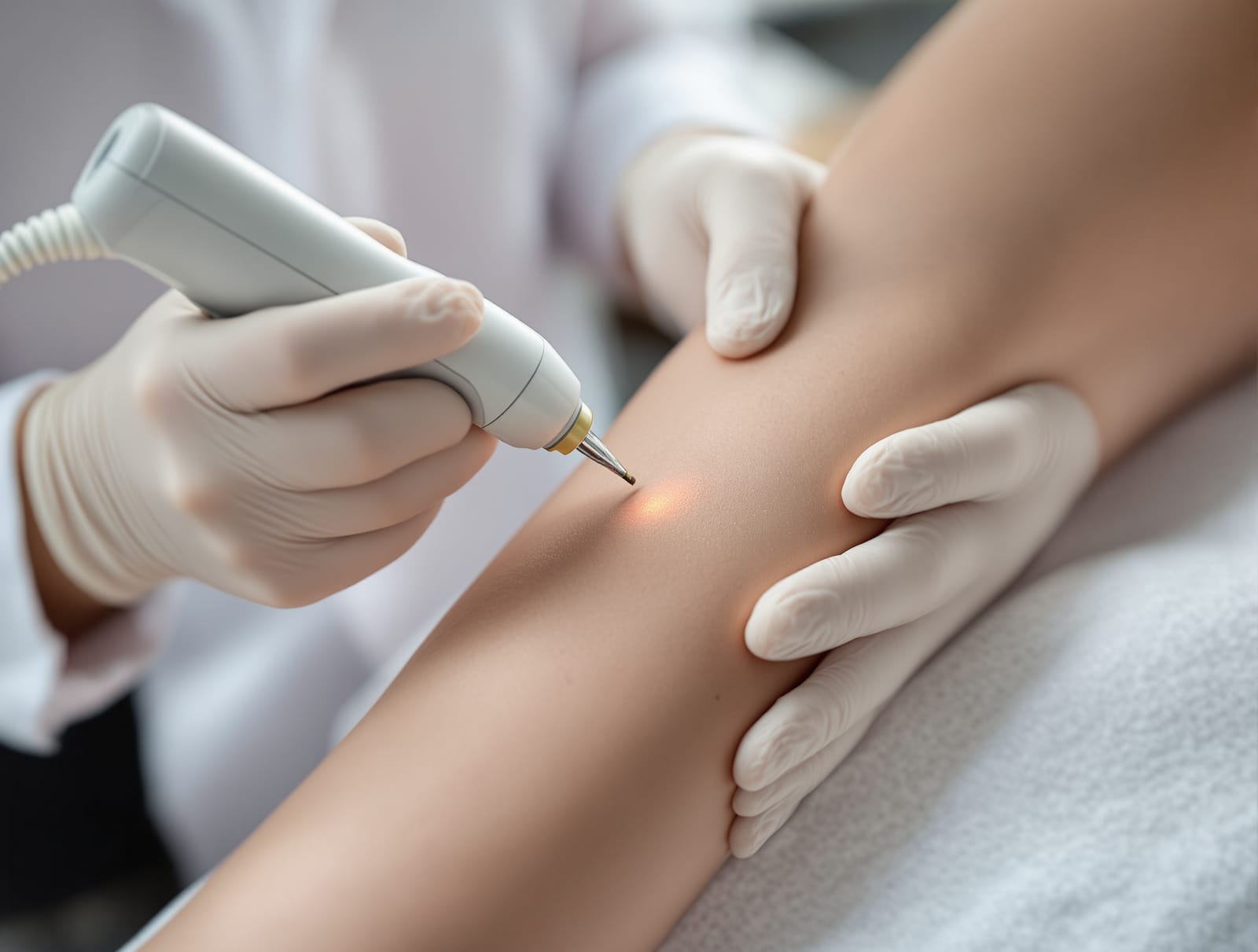
Laser treatment can meaningfully improve a keloid's color, texture, and thickness, but it is rarely a standalone cure. The best results come when a laser is combined with steroid injections and a maintenance plan, and when the right type of laser is matched to your skin tone. Used that way, lasers are a valuable part of the keloid toolkit rather than a magic eraser.
Two different lasers, two different jobs. The keloids you see are red and raised for two separate reasons: an overgrowth of collagen and a dense network of blood vessels feeding the scar. Vascular lasers, chiefly the pulsed dye laser (PDL), target those blood vessels. By shrinking the vessels, PDL fades the pink or purple color, calms itch, and can gradually soften and flatten the scar. Ablative and fractional lasers, such as the fractional CO2 laser, work on texture instead. They drill microscopic columns into the scar to break up rigid collagen and stimulate healthier remodeling, and those same channels can be used to drive medication deeper into the tissue. The American Academy of Dermatology notes that laser therapy is one of several established options for raised scars, most effective as part of a combination approach (AAD, keloid scars).
Why lasers rarely fly solo. A keloid treated with a laser alone has a real chance of coming back, because the laser does not fully switch off the underlying tendency to overproduce collagen. This is why dermatologists typically pair laser sessions with intralesional corticosteroid injections, sometimes delivered right through the channels a fractional laser creates. Studies of laser-assisted drug delivery have shown that combining fractional CO2 with a topical or injected steroid improves flattening and symptom relief compared with either treatment on its own (PubMed, laser-assisted delivery for scars). The pattern echoes what happens with newer injectable options for resistant keloids: the winning strategy is layering treatments, not betting everything on one.
Skin tone changes the plan. Laser choice is not one-size-fits-all, and it matters most for the people most likely to get keloids. In deeper skin tones, some lasers can trigger unwanted lightening or darkening of the treated area, and that pigment shift is both more visible and slower to recover. Experienced clinicians account for this by choosing wavelengths and settings validated for richly pigmented skin, using conservative energy, spacing sessions out, and often leading with lower-risk treatments first. If you have a deeper complexion, ask specifically about the laser's track record on skin like yours before starting. This is the same pigment-first thinking that runs through why keloids are more common in skin of color.
What a course of treatment looks like. Laser work on keloids is a series, not a single visit. Most protocols run several sessions spaced roughly four to eight weeks apart, and improvement accumulates gradually over months. Each session is quick and usually described as a stinging or rubber-band-snap sensation, with numbing cream or cooling to keep it tolerable. Afterward the area may be pink, mildly swollen, or bruised for a few days, especially with pulsed dye laser, which is a normal part of how it works. Realistic gains are a flatter, softer, less angry-looking scar with less itch, rather than skin returned to its original unmarked state.
Where lasers fit among the alternatives. Think of lasers as one lever among several. Steroid injection remains the first move for most keloids; cryotherapy freezes and softens smaller lesions; pressure and silicone help prevent regrowth. Lasers earn their place when color and texture are the main complaints, when a keloid has plateaued on injections alone, or when a scar needs to be primed and softened so other treatments work better. For very large or fast-growing keloids, a dermatologist may sequence laser alongside surgery and injections rather than expecting light to do the whole job.
The takeaway. Laser treatment is a genuine, evidence-backed tool for keloids, best understood as a color-and-texture specialist that shines in combination rather than a cure that works alone. Matched to your skin tone, paired with injections, and repeated over a planned series, it can leave a keloid noticeably flatter, calmer, and closer to the surrounding skin. If a keloid's redness, itch, or ropey texture is bothering you, it is worth asking a dermatologist whether laser belongs in your plan, ideally early, since the same rule holds here as everywhere with keloids: a scar treated sooner is a far easier project than one left to grow.