
Know Your Keloid · July 18, 2026 · 7 min · By Lucian Okoye
Can a keloid turn into cancer? What the evidence actually says
Keloids are benign scar tissue, not tumors. Here is why the cancer fear comes up, the rare exception, and the lumps that only look like keloids.
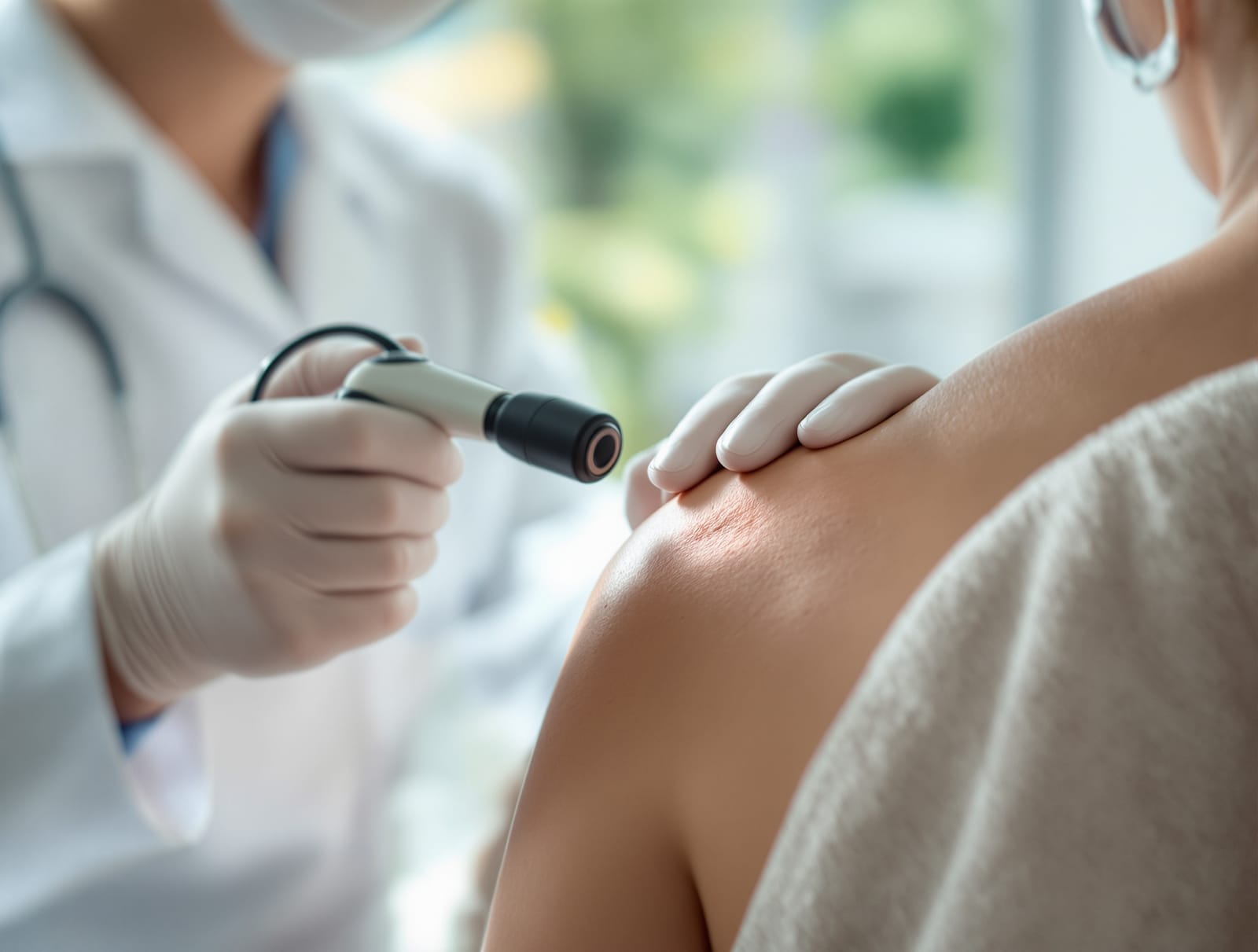
Keloids are benign. A keloid is an overgrowth of the skin's own scar tissue, not a tumor, and unlike cancer it does not invade distant organs or spread through the body. The worry that a keloid might turn cancerous is common, and it makes sense, because keloids keep growing, feel firm and permanent, and refuse to fade the way an ordinary scar does. The honest, reassuring answer is that a keloid becoming cancerous is extraordinarily rare, so rare that most dermatologists will never see a single case in an entire career. The far more useful question for anyone watching a lump is whether it is actually a keloid at all.
What a keloid actually is. A keloid forms when the skin's healing response overshoots. Instead of stopping once a wound has closed, the fibroblasts keep laying down collagen, and the scar spreads beyond the borders of the original injury. That runaway growth is what makes a keloid feel tumor-like, but the tissue itself is ordinary scar collagen, not malignant cells. The American Academy of Dermatology describes keloids plainly as scars that grow larger than the wound that caused them, a benign overgrowth rather than a cancer (AAD, keloids overview). This is the same overhealing biology that separates a keloid from a hypertrophic scar, and neither of those raised scars is a form of skin cancer.
Why the cancer worry keeps coming up. The fear is not irrational, because keloids share several surface features with things people associate with cancer. They enlarge steadily over time, they can be lumpy and irregular in shape, they sometimes itch, sting, or ache, and they simply do not resolve on their own. A growth that does all of that on your skin naturally raises the question. But behavior is not biology: a keloid grows by piling up harmless collagen at a wound site, while a cancer grows by dividing abnormal cells that can invade and spread. Cleveland Clinic is direct that keloids are noncancerous scar tissue, and that although they can be uncomfortable or cosmetically distressing, they do not threaten the rest of the body (Cleveland Clinic, keloids).
The honest exception: the risk is not literally zero. Being thorough means admitting the medical literature is not perfectly empty. There are a small number of published case reports describing a skin cancer, usually a squamous cell carcinoma, arising within a very long-standing keloid or chronic scar. These reports are genuinely rare, they almost always involve scars that have been present for many years or even decades, and the cancer typically announces itself with a clear change rather than appearing out of nowhere. In other words, the concern is not the keloid you have watched stay stable, but a long-standing scar that suddenly starts behaving differently. DermNet notes that malignant change in a keloid or scar is uncommon and tends to follow chronic irritation or non-healing wounds over long periods (DermNet, keloids and hypertrophic scars). The practical lesson is not to panic about keloids in general, but to take a real change in an old scar seriously.
When a lump is not a keloid at all. More often than a keloid turning into something dangerous, the issue is that a lump was never a keloid to begin with. Several harmless growths get mistaken for keloids: an epidermoid cyst, a dermatofibroma, a firm scar nodule, or an enlarged lymph node can all sit under the skin and feel like a keloid to a worried hand. Rarely, a genuine skin cancer that had nothing to do with any scar can be misread as one. The single most useful clue is history. A true keloid almost always starts at the site of a known injury, a piercing, an acne spot, a surgical cut, or a burn, and it grows outward from that exact spot. A firm lump that appears in previously unbroken skin, with no injury behind it, deserves a professional look precisely because it does not fit the keloid story.
The warning signs that deserve a professional look. A stable keloid that has been quietly present for a while is reassuring. What is not reassuring is change. Get any of the following checked promptly: a scar or lump that suddenly grows much faster than before, one that opens, ulcerates, or forms a sore that will not heal, one that bleeds without being knocked or scratched, or one that develops uneven color, crusting, or a raw weeping surface. These are the same red flags covered in when a scar is worth a dermatologist visit, and none of them is normal keloid behavior. The point of watching for them is not fear but timing, since anything caught early is easier to deal with.
How a doctor settles the question. When there is real doubt, a dermatologist does not guess, they take a sample. A skin biopsy removes a small piece of the tissue for a pathologist to examine under a microscope, which distinguishes benign scar collagen from anything worrying with certainty. The procedure is quick, done under local anesthetic, and it turns an anxious maybe into a definite answer. If the biopsy confirms a plain keloid, treatment returns to the usual toolkit of injections, silicone, pressure, and the other measures used to flatten and calm raised scars.
The takeaway. A keloid is benign scar tissue, and the odds of one turning into cancer are vanishingly small. The realistic goals with a keloid are comfort and control, softening it, flattening it, and keeping it in check, which is exactly what a realistic keloid outcome looks like. Save your genuine concern for the uncommon situation that actually warrants it: an old scar that suddenly changes, grows, bleeds, or will not heal. That specific pattern is worth a prompt visit and, if needed, a simple biopsy. Everything else is a keloid being a keloid, stubborn and cosmetic, but not dangerous.